
 中文
 English
 한국어
 にほんごばん
 Français
 Deutsch
 Español
 Русский язык
 بالعربية
 português
 Italiano
 Tiếng
Việt
 คนไทย



The low-odor performance of polyether-based PUR adhesives depends on more than a single raw material. It is also closely related to formulation, post-treatment, processing temperature, equipment conditions, and the substrates being laminated.
In apparel, home textiles, automotive interiors, and functional laminated materials, PUR adhesives must deliver reliable bond strength, a soft hand feel, washing resistance, or environmental resistance. Odor performance is also becoming an increasingly important consideration for customers.
This is particularly relevant to next-to-skin garments, sports underwear, home textiles, automotive seats, headliners, and other laminated materials used in enclosed spaces. Trace volatile substances in adhesives may gradually be released after processing, during storage, or throughout end use, affecting the product's sensory experience and market acceptance.
SINOHESIVE specializes in the research, development, production, and application of PUR adhesives, with an ongoing focus on material selection and process compatibility for low-odor PUR adhesives in textile lamination, automotive interiors, footwear materials, and other laminated materials.
1. Why Does Odor Matter in Polyether-Based PUR Adhesives?
Polyether-based PUR adhesives use polyether polyols as one of their main raw materials. They generally offer good flexibility, low-temperature performance, and hydrolysis resistance, making them valuable for textile lamination, foam bonding, automotive interiors, home textiles, footwear materials, and functional fabrics.
However, material odor does not depend on just one raw material. During production, processing, and use, polyether-based PUR adhesives may be affected by trace raw material residues, low-molecular-weight by-products, catalyst and additive residues, high-temperature thermo-oxidative reactions, storage conditions, and substrate surface conditions.
2. Six Common Sources of Odor in Polyether-Based PUR Adhesives
2.1 Residual Small Molecules Such as PO and EO
If devolatilization is insufficient during polyether polyol production and post-treatment, trace low-molecular-weight substances may remain in the system. These substances may become a source of odor during subsequent adhesive production, melt processing, and product use.
2.2 Unsaturated End Groups and Low-Molecular-Weight By-Products
Unsaturated end groups and low-molecular-weight by-products may form during the polymerization of polyether polyols. Under the influence of high temperatures, oxygen, or other environmental factors, these components may undergo further oxidation or degradation.
2.3 Cyclic Ether By-Products
Some low-molecular-weight cyclic ether by-products are volatile. High-temperature processing, sealed packaging, or enclosed environments may make their odor more noticeable.
2.4 Oxidative Degradation Products
Polyether structures may undergo oxidative degradation under the influence of heat, oxygen, and time, forming peroxides, aldehydes, acids, or other low-molecular-weight oxidation products.
2.5 Catalyst and Additive Residues
Components such as catalysts, antioxidants, stabilizers, plasticizers, and leveling agents affect reaction rate, initial tack, flexibility, and processing performance. Inappropriate selection or dosage may also introduce potential odor sources.
2.6 Thermo-Oxidative Degradation During High-Temperature Processing
If equipment holds the adhesive at temperature for too long, processing temperatures are too high, or the melting system exposes the adhesive to excessive air, the adhesive may undergo thermo-oxidative degradation and generate new volatile low-molecular-weight substances.
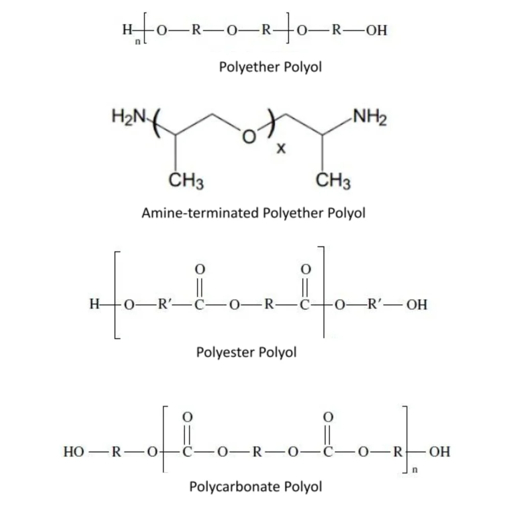
3. Achieving Low-Odor PUR Performance Requires More Than Replacing One Raw Material
When customers encounter product odor issues, their first consideration is often to change the adhesive or replace a raw material. In practice, however, low-odor PUR performance cannot be achieved simply by switching to a different polyether polyol. Material odor is typically related to raw materials, formulation, post-treatment, manufacturing processes, storage conditions, lamination substrates, and on-site processing conditions.
The adhesive is only one component of a laminated structure. Fabric finishing agents, film additives, foam materials, dyeing and printing residues, surface contamination, equipment cleanliness, and production temperature and humidity may also affect the odor of the finished product.
4. Five Key Approaches to Low-Odor PUR Control
4.1 Select Low-Residue Polyether Raw Materials
Pay attention to low-molecular-weight residues, volatile by-products, molecular structure stability, and batch-to-batch consistency.
4.2 Optimize the Formulation and Catalyst System
Balance reaction rate, open time, initial tack, heat resistance, and odor performance.
4.3 Strengthen Post-Treatment and Devolatilization Control
Use appropriate devolatilization, filtration, storage, and packaging management to reduce the risk of subsequent release of low-molecular-weight substances.
4.4 Control Moisture in Raw Materials, Adhesives, and Substrates
Pay attention to adhesive storage, substrate pretreatment, workshop humidity, and equipment sealing.
4.5 Control Melting Temperature, Holding Time, and Oxygen Exposure
Avoid prolonged exposure to high temperatures, and monitor equipment cleanliness and the sealing of the adhesive supply system.
5. Different Applications Have Different Priorities for Low-Odor PUR Adhesives
Functional Apparel and Outdoor Textiles
Customers typically focus on soft hand feel after lamination, moisture vapor transmission, reliable bonding between waterproof-breathable membranes and fabrics, compatibility with highly elastic or water-repellent fabrics, and odor during prolonged wear.
Related application: Fabric-to-Film Lamination Solutions.

Home Textiles and Soft Laminated Materials
In bedding, upholstery fabrics, decorative fabrics, cushions, sleeping bags, and other products, material comfort and odor performance directly affect the consumer experience.
Related application: PUR Adhesive Solutions for Fabric-to-Fabric Lamination.

Automotive Interior Materials
Seat fabrics, headliners, door panels, dashboard wrapping, and other laminated automotive interior materials may be exposed to high temperatures, enclosed spaces, and long-term vibration. Material odor, high-temperature stability, and durability therefore require attention.

6. From Adhesive Supply to Matching the Lamination Solution
In PUR adhesive projects, production results and end-product performance are usually influenced by more than the adhesive itself. Substrate surface treatment, film type, foam density, coating weight, lamination temperature, line speed, equipment conditions, ambient humidity, and the end-use environment can all affect the final outcome.
SINOHESIVE has a PUR application laboratory capable of conducting adhesive coating and lamination trials on roll materials such as films, fabrics, foam, nonwovens, and paper. These trials support the validation of new material structures, lamination processes, and product performance. For low-odor PUR projects, thorough testing with the actual substrates and production conditions is recommended before proceeding to mass production.
7. Conclusion
Polyether polyols can provide PUR adhesives with flexibility, hydrolysis resistance, and good material compatibility. However, the odor performance of polyether-based PUR adhesives is also influenced by raw material residues, unsaturated end groups, cyclic ether by-products, oxidative degradation, additive systems, and high-temperature processing conditions.
The development and application of low-odor PUR adhesives require systematic consideration of low-residue raw materials, formulation optimization, post-treatment devolatilization, moisture management, temperature control, and on-site processing conditions.
Working on a Low-Odor PUR Lamination Challenge?
Whether you are addressing automotive interior odors, material VOC control, odor after fabric lamination, or stability during high-temperature processing, targeted material and process validation is recommended before mass production.
Send the SINOHESIVE team your substrate types, laminated structure, existing equipment, process parameters, and target performance requirements. Based on your application, we can help you evaluate suitable PUR product options and validation approaches.
Contact SINOHESIVE for PUR Adhesive Selection and Application Support